Skip to content
All project collections
iOS, Android & PWA

Useful products designed for the hand.

Native and mobile-first applications built around clear journeys, dependable interaction and repeat everyday use.

iOSAndroidReact NativeProgressive web apps
Mobile Apps
05
Projects
Choosing the right direction

What a strong mobile apps brief needs to answer.

A mobile product succeeds when it earns repeated use. That requires more than compressing a desktop interface onto a small screen: the core task, navigation, feedback, offline behaviour, permissions and account model all need deliberate decisions. PRCONNECT starts by defining the smallest complete journey that is valuable to the user and realistic to operate.

This collection includes installable web products, native release builds and focused prototypes. The case studies label those stages clearly because a concept, beta and public production app carry different evidence. They also show how language, safety, payments, privacy or local context affect the product model long before store submission.

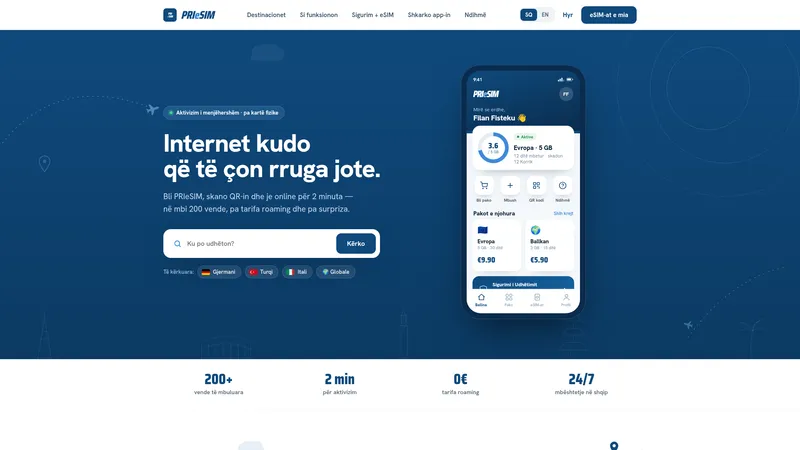
This collection is a reference, not a pre-priced package. The projects shown here—Sakina, PRIeSIM, Dija, StoryLingo, Shijoje—have different audiences, content, data, release stages and operating responsibilities. A comparable engagement begins by verifying the problem, the existing environment and the people who will own the result. That prevents a visual pattern or technology choice from being copied into a business where the workflow, risk or success measure is different. Scope, integrations, accessibility, analytics, security and support are then selected because the product needs them, not because every item belongs in every build.

01

A repeatable core journey

The home screen should make the next useful action obvious. Onboarding, search, purchase, learning or reservation flows are tested around the real user goal, with unnecessary decisions removed before more features are introduced.

02

Platform and distribution choice

Native iOS and Android, React Native and an installable PWA each have different strengths. The decision should reflect device capabilities, offline needs, store distribution, team skills, update frequency and the experience customers already expect.

03

Privacy, safety and trust

Permissions, personal data, children’s use, payments and user-generated content change the delivery plan. Data collection should be purposeful and understandable, with parent gates, consent, reporting or deletion paths added where the product requires them.

04

Operation after release

A release plan includes analytics, support, crash monitoring, content ownership, store assets and an update process. The product is only ready when the team can respond to real usage and maintain the experience after launch.

Delivery path

From context to a product the team can operate.

The exact scope changes by project, but these checkpoints keep business, experience and technical decisions connected.

  1. 01

    Define the product loop

    Identify the user, the repeated task and the moment that proves the app is useful before expanding the backlog.

  2. 02

    Prototype the critical paths

    Test onboarding and the primary task at realistic phone sizes, including empty, loading, error and permission states.

  3. 03

    Build for the chosen platforms

    Implement accessible interaction, dependable state and the device capabilities required by the validated journey.

  4. 04

    Prepare release and support

    Complete privacy material, store information, testing, analytics and an ownership plan for feedback and updates.

Common questions

Practical answers before a first workshop.

Should a new product begin with a native app or a progressive web app?

It depends on distribution and device requirements. A PWA can validate many account, content and commerce journeys quickly, while native delivery is stronger when the product needs deeper device integration, store discovery or platform-specific interaction. PRCONNECT frames the trade-off before choosing the stack.

Can one codebase support both iOS and Android?

For many products, yes. A shared framework such as React Native can reduce duplicated work, but platform testing, store policies, payments and device-specific behaviour still need separate attention. A shared codebase is a delivery strategy, not a reason to ignore each platform’s expectations.

What is needed before an App Store or Google Play submission?

Typical preparation includes a stable tested build, app metadata and screenshots, support and privacy URLs, data-use declarations, account-deletion handling when accounts exist and any required payment or child-safety controls. Exact requirements depend on what the app does and can change over time.

Build the next one

Have a product that belongs in this collection?

We can help shape the offer, user journey, interface and technical delivery as one connected product.

Start a project