The challenge
Surplus food needs a fast, trustworthy route from a donating business to a nearby person, with clear timing, allergen information and pickup accountability.
Surplus Food App
A mobile beta connecting businesses with surplus food to people who can reserve it free of charge for local pickup.
Surplus food needs a fast, trustworthy route from a donating business to a nearby person, with clear timing, allergen information and pickup accountability.
PRCONNECT designed a mobile reservation flow for local discovery, pickup windows and one-time codes, alongside business, privacy and food-safety controls.
Available surplus food can be discovered through a mobile-first local flow.
Time windows and one-time codes make collection clearer.
Allergen declarations and reporting are built into the product model.
Shijoje explores a local reservation flow that connects businesses with surplus food to people who can collect it free of charge. The challenge is operational as well as visual: availability changes quickly, pickup windows matter and both sides need enough information to complete the hand-off safely and respectfully.
The beta direction includes local discovery, reservation, one-time pickup codes and business controls. Allergen context and reporting are visible because a food-sharing product cannot treat safety as a footnote. Shijoje is labelled as a TestFlight beta and Android-ready direction, not as a claim of public scale, guaranteed food availability or a completed Android store release.
Offers need quantity, timing and pickup context so people can decide quickly without assuming surplus stock will remain available.
A reservation and one-time code can give the business and collector a clearer shared state at pickup without creating a complex transaction.
Allergen declarations, business responsibility and reporting paths belong with the offer and reservation journey rather than in an unseen policy page.
The documented beta model is for free reservation and local pickup of surplus food. If payments or delivery were introduced later, the product, legal and operational scope would change and require a separate review.
A production model needs the donating business to provide accurate item, allergen, timing and pickup information. The platform can structure and display that context, but it does not replace the responsibilities of the food operator.
Important checks include offer accuracy, reservation expiry, no-shows, pickup verification, reporting, accessibility and how quickly businesses can update stock. A local pilot is the right place to validate these operational assumptions before wider release.
Travel eSIM Application
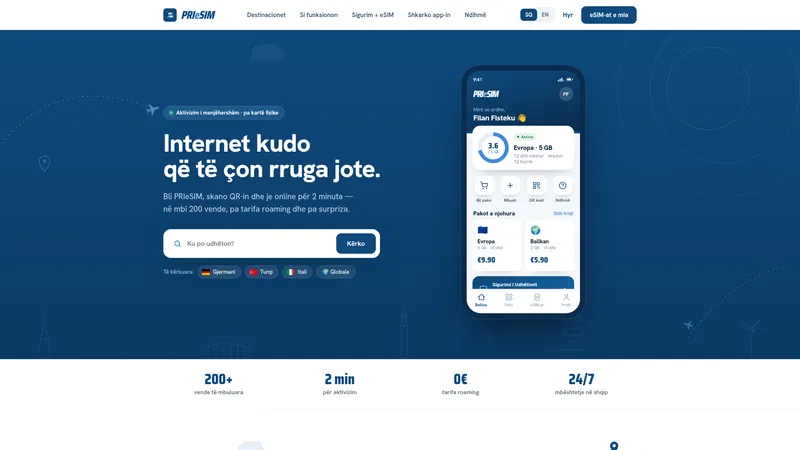
An eSIM storefront that takes travellers from destination search to a data plan and QR activation.
Inside the project
Created by PRCONNECT & Bendyn
Tell us what you need to build, who it is for and where you would like to start.