Trading System
Private product concept01
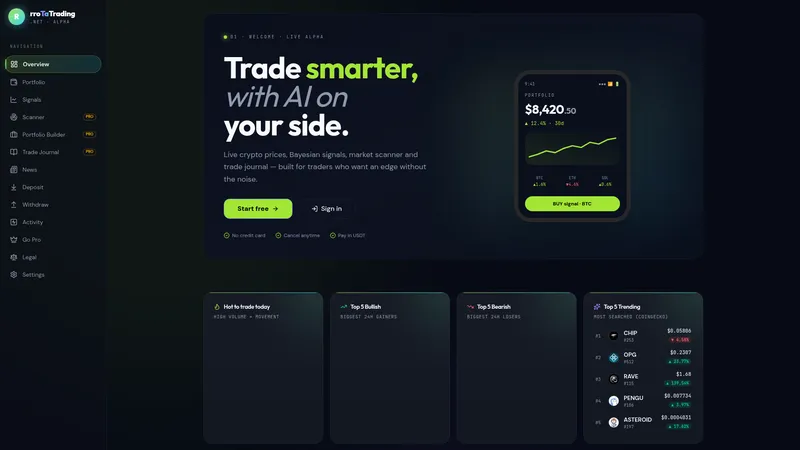
rroTaTrading
An AI-assisted crypto trading workspace combining live prices, Bayesian signals, a market scanner and a structured trade journal.
Private ProductAI / TradingDashboard UI
AI platforms, dashboards and operating workspaces that organise complex information into practical decisions and controlled action.
An AI-assisted crypto trading workspace combining live prices, Bayesian signals, a market scanner and a structured trade journal.
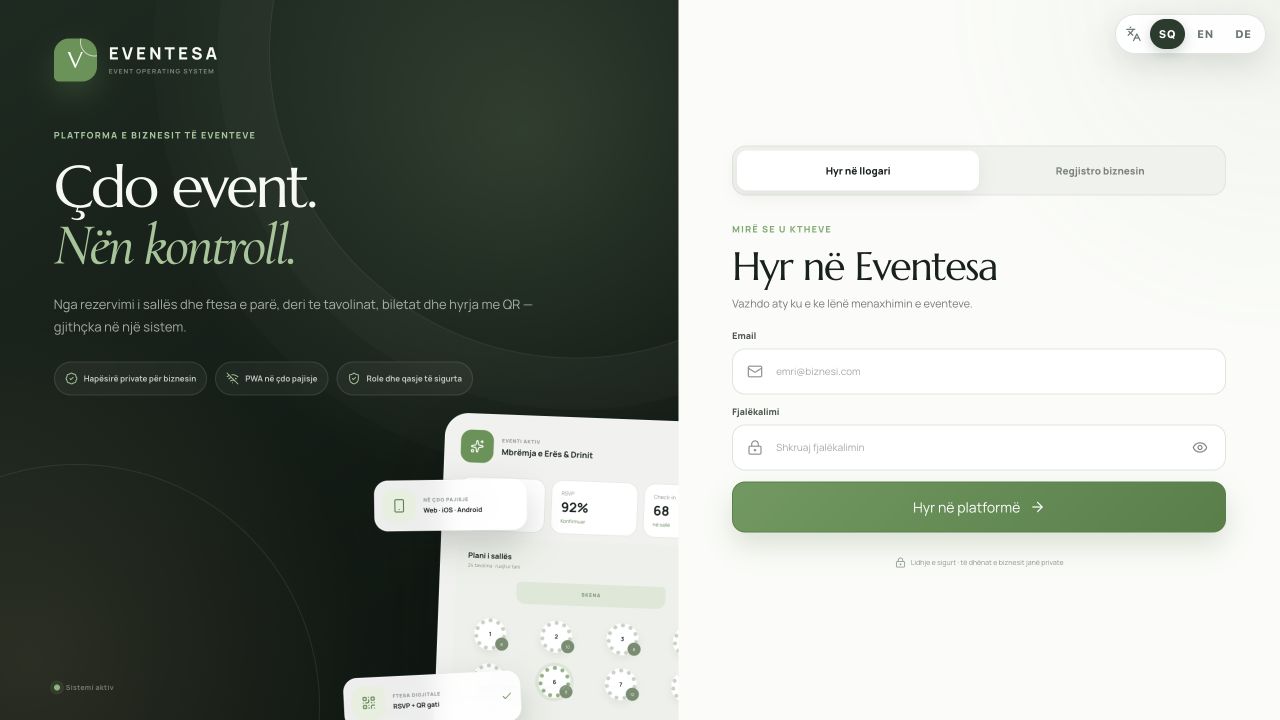
An event operating system bringing venue reservations, digital invitations, RSVPs, seating plans, tickets and QR check-in into one private workspace.
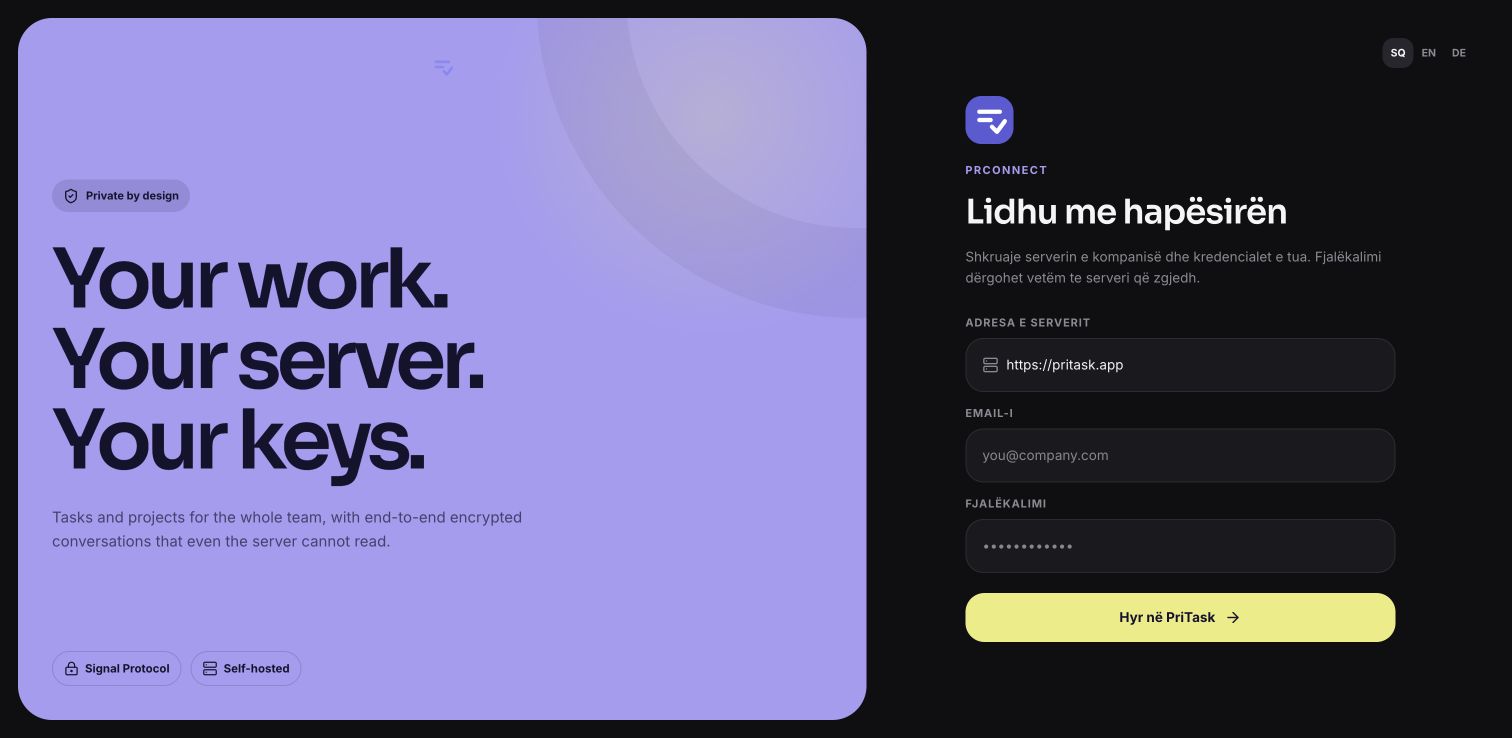
A self-hosted team workspace for tasks and projects, with end-to-end encrypted conversations designed so the server cannot read private messages.
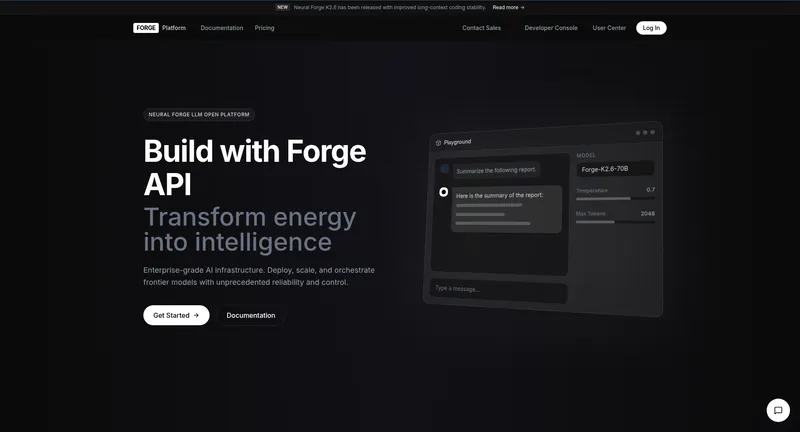
A private enterprise-product concept for deploying, scaling and orchestrating language models through a developer console and controlled playground.
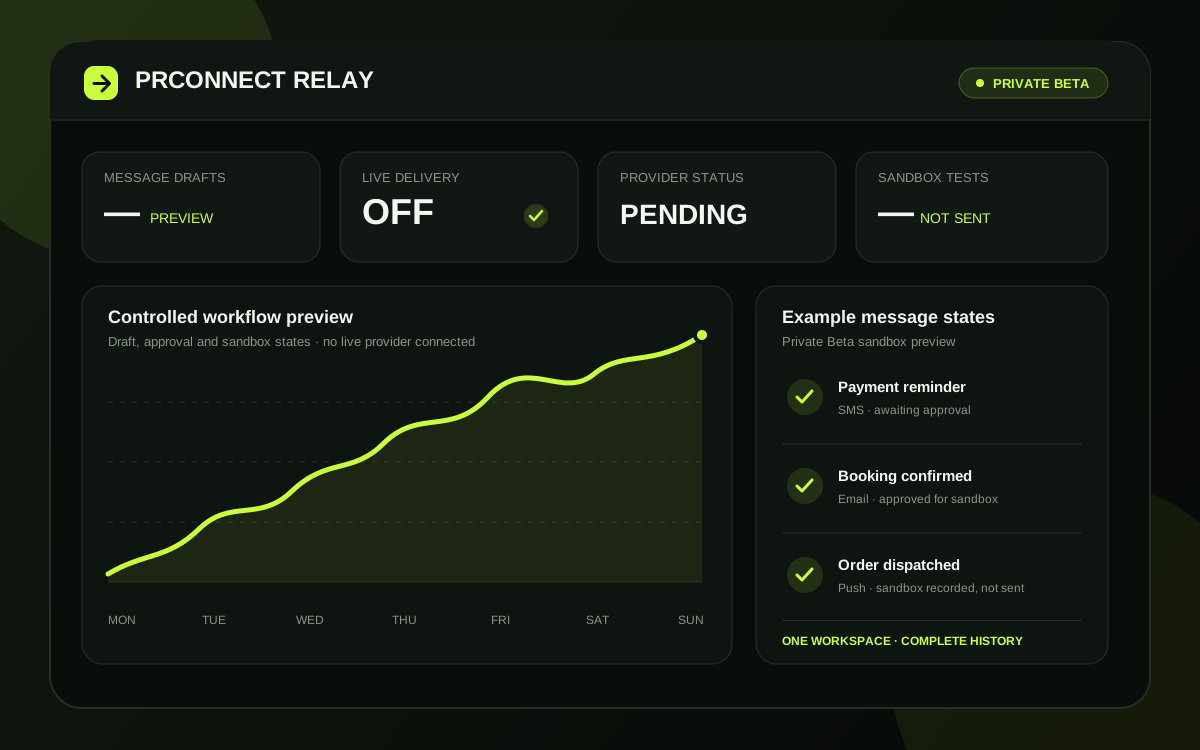
A controlled communication workspace for reusable templates, consent-aware routing, human approval and auditable sandbox message history.
A private business operating system connecting Business Brain, CRM, projects, campaign planning, SEO, commerce, communication and human approvals.
A business platform should reduce operational uncertainty. It has to organise information, permissions and decisions around the way a team actually works rather than reproduce disconnected spreadsheets inside a larger interface. PRCONNECT maps the workflow, the source of truth and the human approvals before choosing automation or AI features.
The platforms in this collection include private concepts, controlled betas and a working operating system. Their case pages describe intended capabilities and implementation scope while keeping confidential data, credentials and unverified performance claims out of the public portfolio. That distinction matters when evaluating business software responsibly.
This collection is a reference, not a pre-priced package. The projects shown here—rroTaTrading, Eventesa, PriTask, Forge — Neural LLM Platform, PRCONNECT Relay, PRCONNECT Growth OS—have different audiences, content, data, release stages and operating responsibilities. A comparable engagement begins by verifying the problem, the existing environment and the people who will own the result. That prevents a visual pattern or technology choice from being copied into a business where the workflow, risk or success measure is different. Scope, integrations, accessibility, analytics, security and support are then selected because the product needs them, not because every item belongs in every build.
Teams need a clear answer to where customer, project, campaign or system state lives. A platform should define authoritative records and ownership instead of synchronising uncertainty between several tools.
Sensitive actions require more than a polished button. Access levels, audit history, consent, review and rollback expectations should be part of the workflow design, especially when communication, money, customer data or infrastructure is involved.
Automation should remove repeatable work while preserving human judgement where context or risk matters. AI output is treated as a draft or recommendation unless the business has explicitly approved a controlled action path.
APIs, import formats, error handling, backups and observability determine whether a platform can operate beyond a demo. Integration choices are prioritised around the workflow and data quality rather than the number of logos on a connector screen.
The exact scope changes by project, but these checkpoints keep business, experience and technical decisions connected.
Document actors, records, hand-offs, exceptions and current tools so the product solves the real bottleneck.
Specify permissions, approvals, audit requirements and failure behaviour before automation is introduced.
Connect the smallest end-to-end workflow that creates value, then validate it with the people who do the work.
Use adoption, support issues and measurable process outcomes to decide which integration or capability comes next.
Often yes, when the existing product provides an appropriate API, export or supported integration method. The first step is to verify access, data ownership, rate limits and failure handling. A proposed connector is not described as live until credentials and an end-to-end test confirm it.
Not by default. PRCONNECT designs AI assistance around clear boundaries. Research, classification and draft generation can accelerate work, while publishing, spending, sending or changing sensitive systems stays behind explicit permissions and human approval unless a safer rule has been deliberately agreed.
A focused pilot should cover the main workflow, real roles, representative data and known failure cases. Feedback, audit history, reliability and support load are reviewed before more teams or automations are added. This reduces the risk of scaling a workflow that is not yet understood.
We can help shape the offer, user journey, interface and technical delivery as one connected product.
Start a project