01 · The challenge
What the product needed to solve
Young learners need short, playful practice that works without accounts, advertising or a complicated setup, while parents need a simple view of progress.
An offline-first Albanian learning game for children, combining picture words, letter building, numbers, the Albanian alphabet and parent-visible progress.
Young learners need short, playful practice that works without accounts, advertising or a complicated setup, while parents need a simple view of progress.
PRCONNECT built a child-friendly game loop around Albanian words, numbers and letters, with local progress, clear feedback and a separate parent area.
Picture words, letter building, counting and the 36-letter alphabet.
No account, ads or personal-data collection; progress stays on the device.
Progress, settings and privacy controls stay separate from play.
A closer account of the audience, operating constraint and decisions represented by this public project page.
Dija is an offline-first Albanian learning prototype for children. The product uses short picture, letter and number activities so a young learner can begin without an account or complicated setup. Progress stays on the device, while a separate parent area keeps settings and review away from the play flow.
The prototype deliberately limits data collection and commercial pressure. There are no ads or required personal profiles in the described model, and parent-facing controls remain distinct from child interaction. The public route demonstrates the concept and provides support and privacy information; it is not presented as proof of an App Store release, classroom outcome or measured learning gain.
The activities reflect the complete 36-letter alphabet and Albanian words instead of adapting a generic English learning pattern after the fact.
An offline-first approach supports simple access and reduces the need to collect child data for a basic learning loop.
Progress, privacy and settings belong in a parent zone so the child’s main experience stays focused and accidental changes are less likely.
The recorded scope connects Product concept, Game UX, Interaction design, App-store support pages for Mobile web, Installable prototype. The current public status is “Web prototype”. These labels describe the work and delivery stage represented here; they are not a substitute for a production audit of the linked product.
PRCONNECT does not publish private customer data, confidential architecture, revenue, adoption or conversion figures on this page. Where no verified result is shown, the case study explains the problem, product direction and delivered or prepared capabilities without inventing an outcome.
A team evaluating a similar children's learning prototype should use this record as decision context rather than a fixed package. The capabilities described here—four learning modes, offline privacy, parent zone—were shaped around this product’s audience, constraints and delivery stage. A new brief should confirm its own users, content or data ownership, integrations, permissions, accessibility, measurement and support model before copying an interface or choosing a stack. That review is what turns a visual reference into a system the organisation can operate responsibly after launch.
The prototype described here does not require an account. Progress is intended to remain on the device. If future features introduce synchronisation or profiles, the privacy model and parent controls would need a new review before release.
It is designed as an installable mobile web prototype. Actual installation prompts and offline behaviour vary by browser and operating system, so both iOS and Android paths should be tested before presenting it as a store-distributed app.
A responsible next step would use age-appropriate observation with parents or educators, looking at comprehension, confusion, repeat use and accessibility. The interface itself is not evidence of an educational outcome.
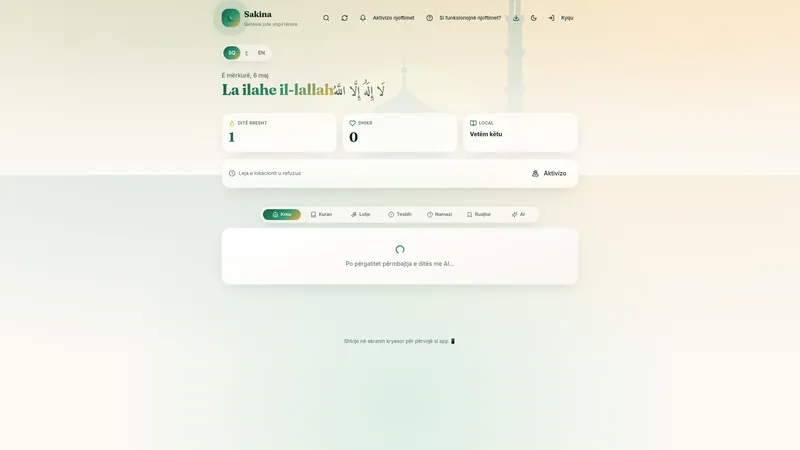
A modern Albanian Islamic companion for daily dhikr, Quran reading, prayer times, tasbih and calm AI-assisted content.
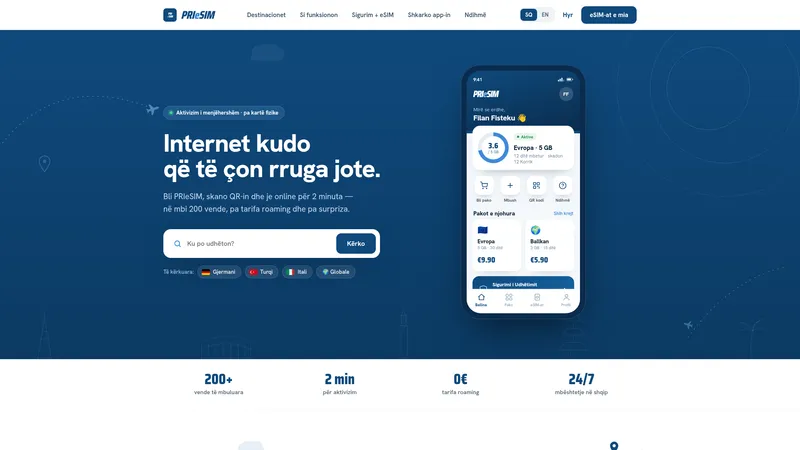
An Albanian travel eSIM experience with destination discovery, clear plans and QR-based activation for connectivity across more than 200 countries.
We will help map the product, workflow and technical delivery required to move it forward.
Start a project