01 · The challenge
What the product needed to solve
Language learners need material that feels approachable at their level while parents and stores require a clear, child-safe product model.
A native iOS and Android reading application with 24 graded A1–C2 stories and seven selectable language courses.
Language learners need material that feels approachable at their level while parents and stores require a clear, child-safe product model.
The app combines graded stories, listening and progress cues in one native codebase, with parent-gated premium access and platform-specific child-safety decisions.
Reading content spans beginner A1 through advanced C2 levels.
Learners can switch between supported language paths.
One React Native codebase supports iOS and Android releases.
A closer account of the audience, operating constraint and decisions represented by this public project page.
StoryLingo is a native reading application organised around graded stories from A1 to C2 and seven selectable language courses. The product direction gives learners material at an understandable level while combining reading, listening and progress cues in one repeated flow rather than scattering them across separate exercises.
Because the application can be used by younger audiences, release work includes more than story screens. Parent-gated premium access, store declarations, privacy material and child-safe monetisation decisions are part of the product scope. The case study labels StoryLingo as a release build; it does not claim that every store approval, course outcome or adoption metric is already complete.
A1–C2 levels give learners a clearer expectation of difficulty and allow progress to be framed around suitable material rather than an undifferentiated story library.
React Native supports iOS and Android delivery from one main codebase while preserving the need for platform-specific testing, payments and store preparation.
Premium purchase and sensitive settings are separated from the child-facing reading loop so the experience can remain focused and safer.
The recorded scope connects Product design, React Native development, Store preparation, Child-safe monetisation for iOS, Android, Tablet. The current public status is “Release build”. These labels describe the work and delivery stage represented here; they are not a substitute for a production audit of the linked product.
PRCONNECT does not publish private customer data, confidential architecture, revenue, adoption or conversion figures on this page. Where no verified result is shown, the case study explains the problem, product direction and delivered or prepared capabilities without inventing an outcome.
A team evaluating a similar language learning app should use this record as decision context rather than a fixed package. The capabilities described here—24 graded stories, seven courses, native delivery—were shaped around this product’s audience, constraints and delivery stage. A new brief should confirm its own users, content or data ownership, integrations, permissions, accessibility, measurement and support model before copying an interface or choosing a stack. That review is what turns a visual reference into a system the organisation can operate responsibly after launch.
The case study describes 24 graded stories across A1–C2 and seven selectable language courses. Content completeness, language quality and audio behaviour should still be verified in the release candidate for each supported course.
No. Shared implementation reduces duplication, but iOS and Android still differ in navigation details, permissions, purchases, accessibility and store policy. Both release paths need device and platform-specific checks.
The team should monitor crashes, reading completion, confusing interactions, parent feedback and content corrections. Those signals can guide the next stories or product improvements without collecting more personal data than the product needs.
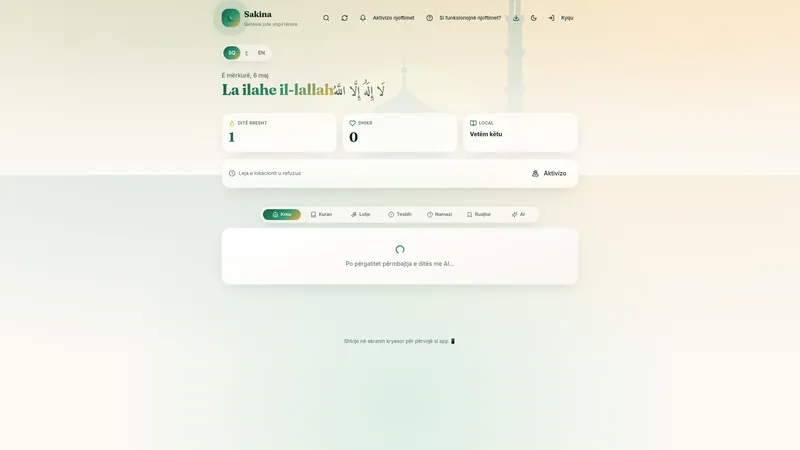
A modern Albanian Islamic companion for daily dhikr, Quran reading, prayer times, tasbih and calm AI-assisted content.
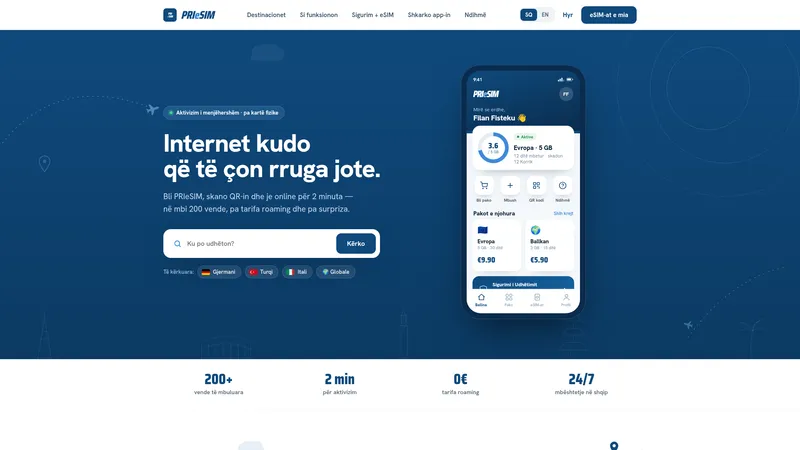
An Albanian travel eSIM experience with destination discovery, clear plans and QR-based activation for connectivity across more than 200 countries.
We will help map the product, workflow and technical delivery required to move it forward.
Start a project